

Environmental compliance has become one of the defining challenges of modern shipping. Beyond operational emissions and pollution prevention, regulators are increasingly focused on the entire lifecycle of a vessel—from construction to recycling. A central pillar of this lifecycle approach is the Inventory of Hazardous Materials (IHM). The IHM is no longer just a documentation exercise. It is a mandatory requirement under international regulations and a frequent focus area during Flag State and Port State Control (PSC) inspections. Failure to comply can result in deficiencies, delays, or even detention.
What is the Inventory of Hazardous Materials (IHM)?
The Inventory of Hazardous Materials (IHM) is a ship-specific document that identifies and quantifies hazardous materials present onboard. It is designed to ensure that these materials are properly managed during the vessel’s operational life and safely handled at the recycling stage.
The IHM consists of three parts:
- Part I: Hazardous materials contained in ship structure and equipment
- Part II: Operationally generated wastes
- Part III: Stores
Part I is mandatory throughout the vessel’s life, while Parts II and III are primarily required when the ship is prepared for recycling.
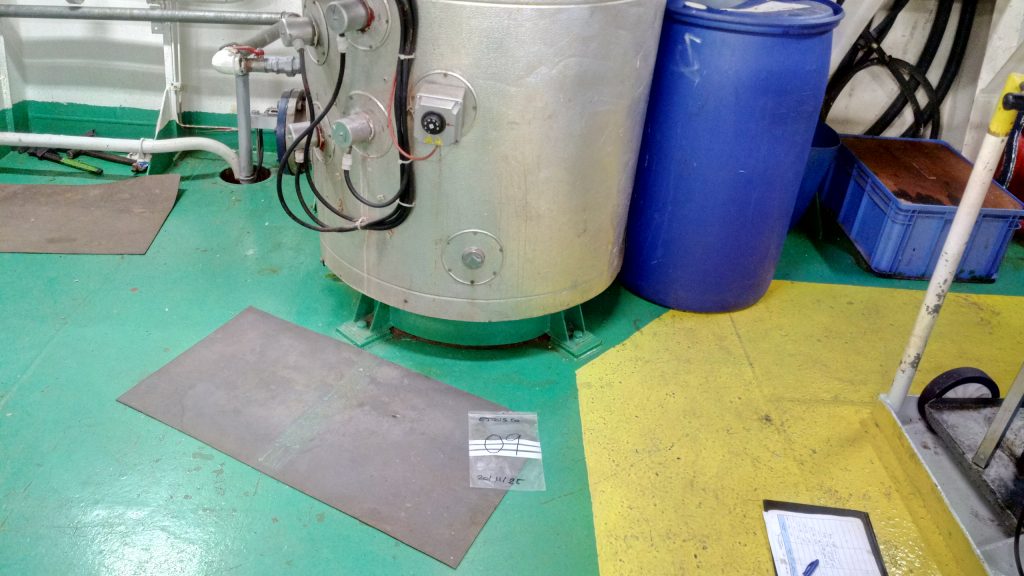
Purpose of the IHM
The primary objective of the IHM is to protect:
1. Human Health
Ship recycling, particularly in developing countries, has historically exposed workers to dangerous substances such as asbestos and heavy metals. The IHM ensures that these risks are identified in advance.
2. Environmental Protection
Hazardous materials, if not properly managed, can cause significant environmental damage during dismantling.
3. Transparency Across the Ship Lifecycle
The IHM provides a clear record of materials used during construction, maintenance, and retrofitting.
Regulatory Framework
Hong Kong Convention (HKC)
The IHM originates from the International Convention for the Safe and Environmentally Sound Recycling of Ships (Hong Kong Convention). Although its global enforcement has evolved over time, it established the technical foundation for IHM requirements.
EU Ship Recycling Regulation (EU SRR)
The EU Ship Recycling Regulation (EU SRR) made IHM compliance mandatory for:
- All EU-flagged ships
- Non-EU ships calling at EU ports
Under the EU SRR:
- Ships ≥500 GT must carry a certified IHM (Part I)
- A Statement of Compliance (SoC) or Certificate of Compliance is required
This regulation is currently one of the main drivers of PSC inspections related to IHM.
IMO Guidelines
The IMO has issued detailed guidelines for:
- Development of the IHM
- Sampling procedures
- Certification process
These guidelines define how hazardous materials should be identified, documented, and maintained.
Structure of IHM Part I
Part I is the most critical section and includes:
1. Hazardous Materials Table
This lists materials such as:
- Asbestos
- Ozone-depleting substances (ODS)
- Polychlorinated biphenyls (PCBs)
- Anti-fouling compounds
- Heavy metals
Each material is linked to:
- Location onboard
- Approximate quantity
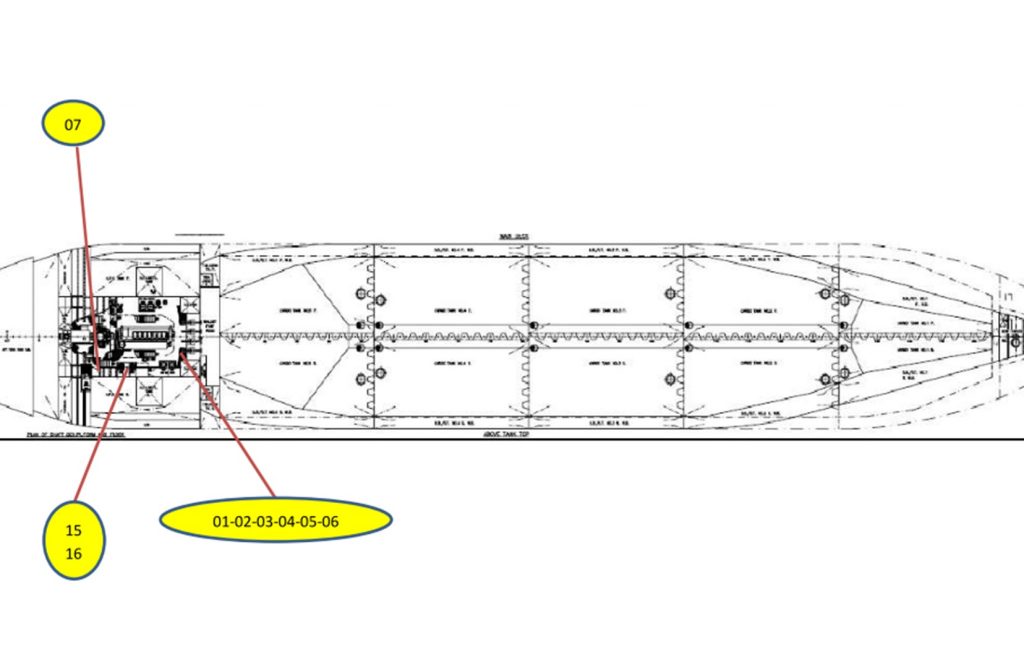
2. Location Diagram
A visual representation (often drawings or plans) showing where hazardous materials are located.
3. Supporting Documentation
Includes:
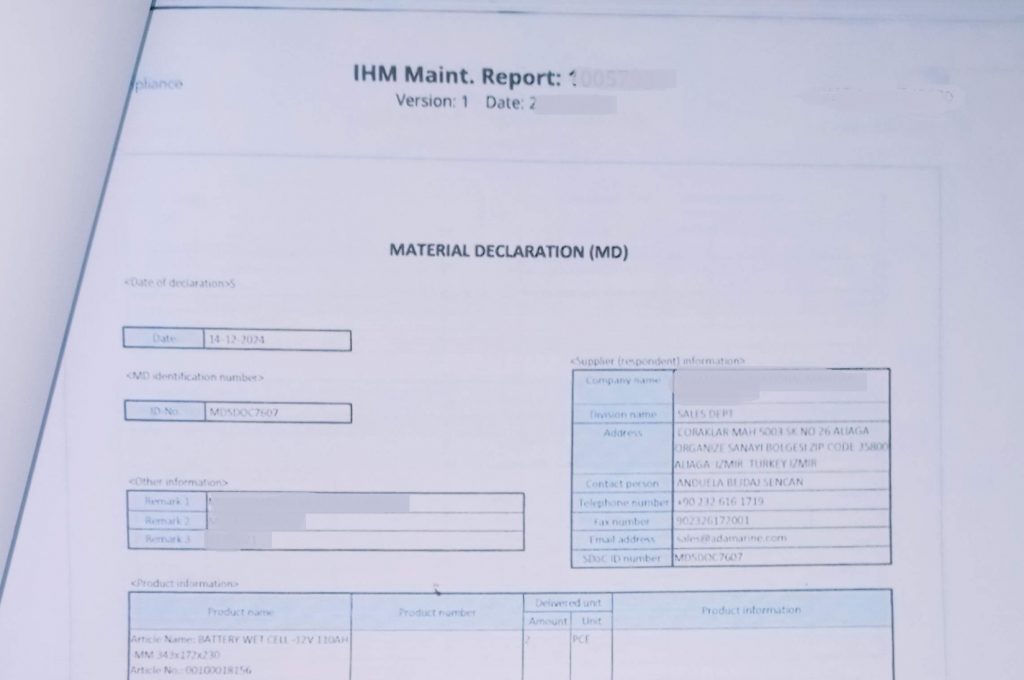
- Material Declarations (MD)
- Supplier’s Declarations of Conformity (SDoC)
- Sampling reports
Key Requirements for Compliance
1. Development of IHM
For new ships:
- IHM is developed during construction
- Based on supplier documentation
For existing ships:
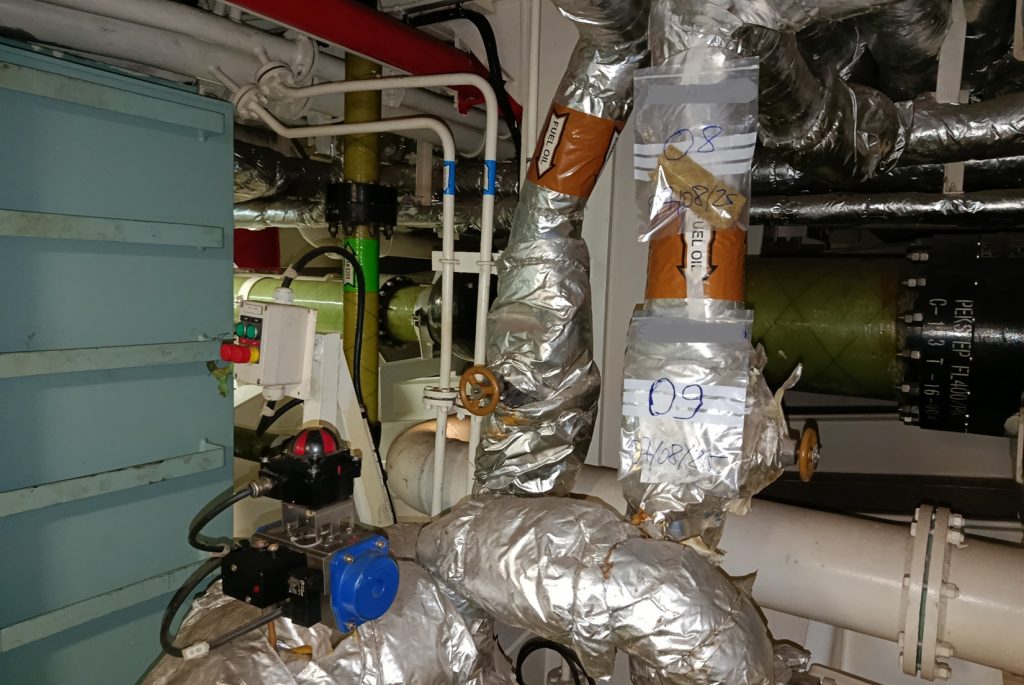
- Requires onboard survey and sampling
- Laboratory analysis may be needed
2. Certification
Depending on the flag and regulation:
- International Certificate on IHM (HKC framework)
- EU IHM Certificate / Statement of Compliance
Certification is issued after verification by the Flag Administration or a Recognized Organization (RO).
3. Maintenance and Updates
The IHM must be:
- Continuously updated
- Reflective of modifications, retrofits, and repairs
Failure to update is one of the most common compliance gaps.
4. Onboard Availability
The IHM must:
- Be readily accessible onboard
- Be available in English
- Match the actual condition of the vessel
Operational Challenges
Despite its structured framework, IHM implementation presents several challenges:
Incomplete Supplier Documentation
Older vessels often lack proper Material Declarations, requiring extensive sampling.
Poor Integration into Maintenance Processes
IHM updates are sometimes overlooked during equipment replacement.
Lack of Crew Awareness
Crew may not understand the purpose or structure of the IHM.
These gaps frequently lead to inspection findings
What Flag State and PSC Inspectors Check
IHM compliance is increasingly targeted during inspections, especially in EU ports. Inspectors focus on both documentation and practical implementation.
1. Presence and Validity of the IHM Certificate
Inspectors will verify:
- Existence of a valid IHM certificate or Statement of Compliance
- Issuing authority (Flag or Recognized Organization)
- Expiry dates and endorsements
Missing or invalid certification is a serious deficiency.
2. Availability of IHM Onboard
The IHM must be:
- Physically available or accessible electronically
- Presented upon request without delay
Failure to produce the document is often recorded as a deficiency
3. Consistency Between IHM and Ship Condition
Inspectors may cross-check:
- Equipment listed in the IHM
- Actual installations onboard
Examples include:
- Machinery replacements
- New insulation materials
- Modified piping systems
Any mismatch raises concerns about proper maintenance.
4. Updates and Maintenance
A key inspection focus is whether the IHM is being actively maintained.
Inspectors may review:
- Records of updates after repairs or retrofits
- Recent modifications reflected in the IHM
An outdated IHM is one of the most frequent findings.
5. Supporting Documentation
Inspectors may request:
- Material Declarations (MD)
- Supplier Declarations of Conformity (SDoC)
- Sampling reports
Lack of supporting evidence may lead to observations or deficiencies.
6. Crew Familiarity
Although IHM is often managed by shore staff, onboard personnel must have basic awareness.
Inspectors may ask:
- What the IHM is used for
- Where it is located
- Who is responsible for updates
Poor answers can lead to ISM-related findings.
7. Hazardous Materials Identification
Inspectors may verify specific items such as:
- Asbestos-free declarations
- ODS-containing equipment (e.g., refrigeration systems)
- Anti-fouling systems
If discrepancies are found, more detailed inspections may follow.
Common Deficiencies Identified During Inspections
Based on PSC trends, typical IHM-related deficiencies include:
- Missing IHM certificate
- IHM not available onboard
- Outdated IHM (not reflecting modifications)
- Lack of supporting documentation
- Inconsistencies between IHM and actual equipment
- Crew unfamiliarity
These deficiencies may be recorded under:
- Environmental compliance
- ISM Code (documentation and procedures)
Practical Recommendations for Shipowners and Managers
To ensure compliance and avoid PSC issues:
1. Keep IHM Updated
Integrate IHM updates into:
- Planned Maintenance System (PMS)
- Procurement procedures
2. Ensure Proper Documentation Flow
- Request MD and SDoC from suppliers
- Maintain organized records
3. Conduct Internal Audits
- Periodically verify IHM accuracy
- Cross-check with onboard equipment
4. Train Crew
- Provide basic awareness training
- Ensure key officers know where documents are located
5. Prepare for PSC Inspections
- Verify certificate validity
- Ensure IHM is accessible
- Review recent modifications
Conclusion
The Inventory of Hazardous Materials is a cornerstone of modern maritime environmental compliance. It connects ship construction, operation, and recycling into a single transparent framework that protects both people and the environment. However, compliance is not just about having a certified document onboard. Flag State and PSC inspections increasingly focus on accuracy, maintenance, and practical implementation. For shipowners and operators, the key to success lies in treating the IHM as a living document—integrated into daily operations, properly maintained, and fully understood by both shore and ship personnel. A well-managed IHM not only ensures regulatory compliance but also demonstrates a proactive commitment to safety, sustainability, and responsible ship management.
