

Fire remains one of the most serious risks onboard any vessel. Unlike other emergencies, it can escalate within seconds, compromise critical systems, and quickly put lives, cargo, and the ship itself at risk. For this reason, fire drills are not just a regulatory requirement—they are a fundamental element of onboard safety culture. Despite their importance, fire drills are frequently treated as routine exercises. However, during flag state inspections and Port State Control (PSC) examinations, these drills are closely scrutinized. Inspectors are not only checking compliance with regulations but also evaluating whether the crew is truly capable of responding effectively to a real fire scenario.
The Purpose of Fire Drills
Fire drills are designed to prepare the crew to respond immediately and effectively to onboard fires, minimizing damage and protecting lives.
The main objectives include:
- Ensuring rapid detection and reporting of fire
- Practicing alarm procedures and communication protocols
- Training crew in fire-fighting techniques and equipment use
- Verifying the readiness of fire detection and suppression systems
- Reinforcing command structure and emergency coordination
A well-executed fire drill builds confidence and competence. In real emergencies, hesitation or poor coordination can result in catastrophic consequences. Regular drills ensure that each crew member understands their role and can act without delay.
Regulatory Framework: SOLAS Requirements
Fire drills are governed by the International Convention for the Safety of Life at Sea (SOLAS), specifically Chapter III, Regulation 19, and complemented by requirements in Chapter II-2 related to fire protection, detection, and extinction.
Frequency Requirements
SOLAS establishes minimum standards for fire drills:
- Fire drills must be conducted at least once every month
- Each crew member must participate in at least one drill every month
- Drills must take place within 24 hours of departure if a significant portion of the crew has changed
- On passenger ships, drills are typically carried out weekly
These requirements ensure continuous preparedness, particularly on vessels with frequent crew changes.
Scope of Fire Drills
A compliant fire drill should simulate a realistic emergency scenario and include as many operational elements as safely possible.
Typical components include:
- Activation of the fire alarm
- Reporting of the fire location
- Muster of fire teams and support teams
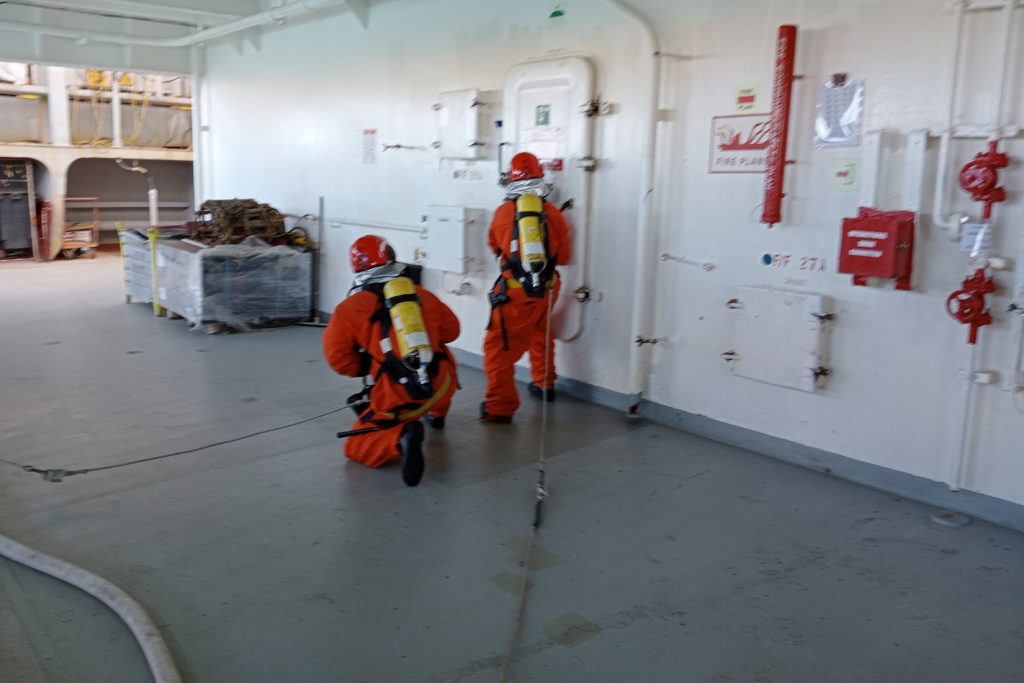
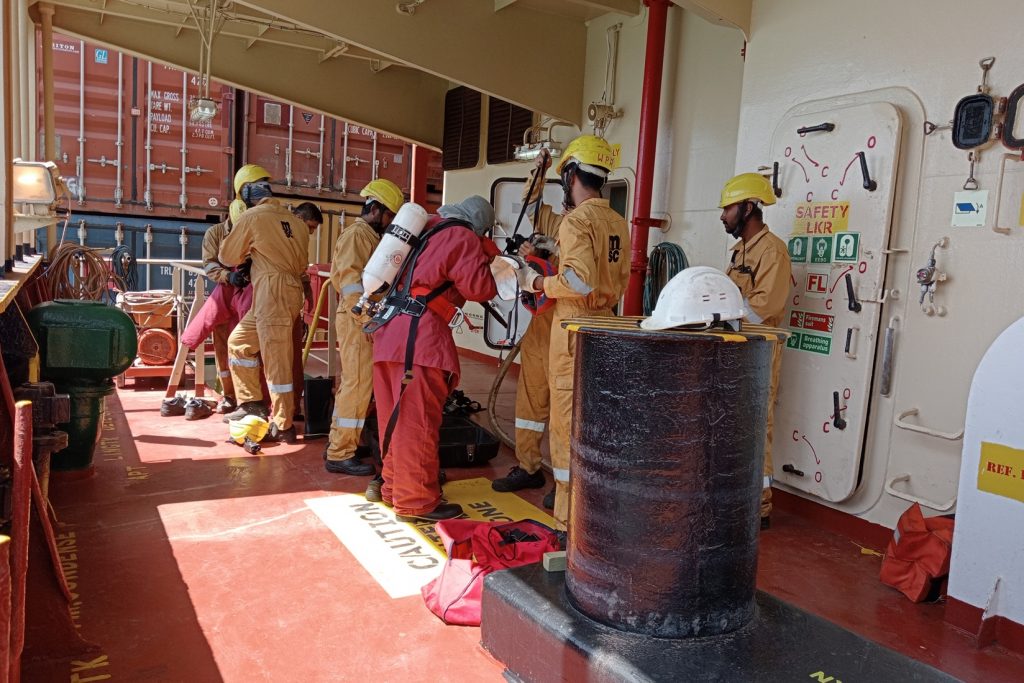
- Donning of fireman’s outfits and breathing apparatus (SCBA)
- Deployment of fire hoses and nozzles
- Operation of fire pumps (main and emergency)
- Boundary cooling and containment procedures
- Communication between bridge, engine room, and fire teams
Where feasible, drills should involve actual operation of equipment rather than purely simulated actions.
All drills must be recorded in the logbook, including details of the scenario, participating crew, and any deficiencies identified.
Practical Value Beyond Compliance
While SOLAS defines the minimum requirements, the effectiveness of fire drills depends entirely on how they are conducted onboard.
Properly executed drills help to:
- Identify weaknesses in emergency response procedures
- Detect malfunctioning equipment or systems
- Improve coordination between departments
- Reinforce situational awareness and leadership under pressure
Fire drills are also an essential tool to verify the condition and readiness of fire-fighting systems, including pumps, hydrants, fixed installations, and portable extinguishers.
Vessels that conduct realistic and well-structured drills tend to demonstrate significantly better performance during inspections and actual emergencies.
What Flag State and PSC Inspectors Evaluate
During Flag State inspections, fire safety and emergency preparedness are priority areas. Inspectors assess not only documentation and equipment condition, but also the crew’s practical ability to respond effectively to a fire emergency.
1. Crew Knowledge and Familiarity
Inspectors often question crew members directly:
- What is your role in case of fire?
- Where is your muster station?
- How do you operate fire-fighting equipment?
Crew members are expected to demonstrate clear understanding of their assigned duties. Lack of knowledge is considered a serious deficiency.
2. Muster List and Assigned Duties
The muster list must:
- Clearly define fire response roles
- Be updated according to the current crew
- Be properly displayed and accessible
Inspectors verify that the crew’s understanding matches the documented assignments.
3. Execution of Fire Drills
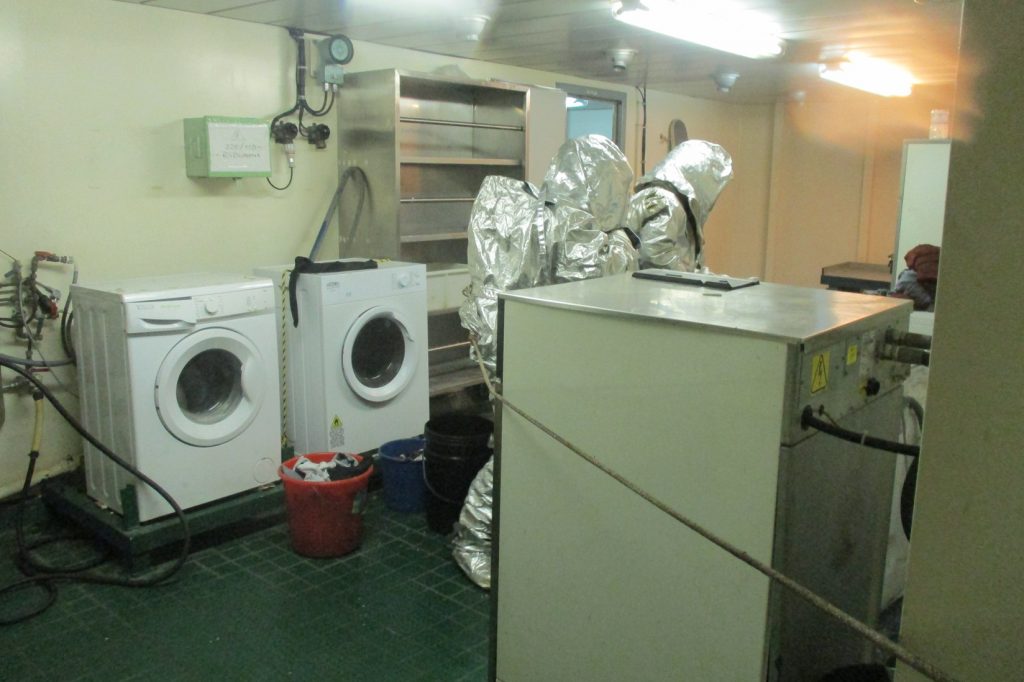
If a drill is observed or requested, inspectors evaluate:
- Speed and organization of the response
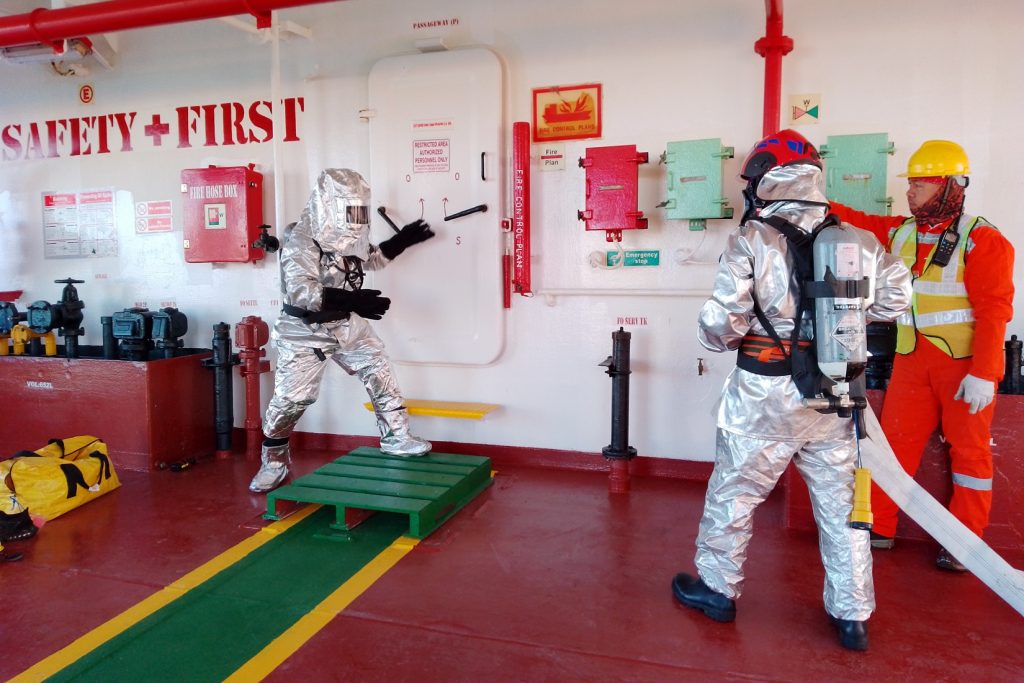
- Correct use of personal protective equipment
- Proper communication and reporting
- Effectiveness of command and control
The scenario should reflect a realistic fire situation, including location, escalation, and response strategy.
4. Operation of Fire-Fighting Equipment
Inspectors may request demonstrations of:
- Starting the fire pump and emergency fire pump
- Pressurizing the fire main
- Using fire hoses and nozzles
- Operating fixed fire-extinguishing systems (simulation where necessary)
- Donning and using SCBA equipment
Equipment must be operated safely and correctly, following established procedures.
5. Condition and Readiness of Systems
The physical condition of fire-fighting systems is critical.
Inspectors check:
- Fire pumps and hydrants
- Fixed systems (CO₂, foam, water mist, etc.)
- Fire detection and alarm systems
- Portable extinguishers
- Fire doors and dampers
Any malfunction, poor maintenance, or inoperative system may lead to deficiencies or detention.
6. Records and Documentation
Documentation is thoroughly reviewed, including:
- Fire drill records
- Maintenance logs
- Testing of fire detection systems
- Servicing of equipment
Inconsistent or incomplete records are treated as non-compliance.
7. Safety During Drills
Authorities increasingly focus on ensuring that drills are conducted safely.
Inspectors may verify:
- Risk assessments prior to drills
- Proper supervision
- Safe use of equipment
- Avoidance of unnecessary hazards
Training must never compromise crew safety.
Common Deficiencies Identified During Inspections
Typical deficiencies related to fire drills include:
- Crew unfamiliar with fire duties
- Inoperative fire pumps or equipment
- Failure to conduct drills at required intervals
- Poorly executed or unrealistic drills
- Inadequate communication during exercises
- Missing or incorrect records
These issues often indicate deeper problems within the vessel’s Safety Management System (SMS).
Best Practices for Inspection Readiness
To ensure compliance and improve safety, operators should adopt a proactive approach:
1. Conduct Realistic Drills
Simulate credible scenarios and involve actual equipment whenever possible.
2. Train All Crew Members
Ensure that everyone understands their role and can perform assigned tasks.
3. Debrief After Each Drill
Identify gaps and implement corrective actions.
4. Maintain Equipment Continuously
Routine maintenance should ensure full operational readiness at all times.
5. Integrate Drills with SMS
Align onboard practices with company procedures and documentation.
Conclusion
Fire drills are a critical component of maritime safety and a key focus during PSC and flag state inspections. Compliance with SOLAS is only the starting point—true safety depends on the crew’s ability to respond effectively under pressure. Inspectors are not just checking whether drills are carried out; they are assessing whether the vessel is genuinely prepared for a fire emergency. Ships that prioritize realistic training, proper maintenance, and crew competence are better equipped to pass inspections and, more importantly, to protect lives and assets at sea. Fire onboard is unforgiving. Preparation is the only effective defense.
