

In modern shipping, where automation continues to reduce manual intervention on the bridge, the human element remains one of the most critical risk factors in navigation. Fatigue, distraction, and sudden incapacitation of the Officer of the Watch (OOW) have been contributing factors in numerous maritime incidents. To mitigate these risks, the Bridge Navigational Watch Alarm System (BNWAS) has become a mandatory safety feature under international regulations.
What is BNWAS?
The Bridge Navigational Watch Alarm System (BNWAS) is an automated monitoring and alarm system designed to ensure that the Officer of the Watch remains alert and capable of performing navigational duties at all times. If the system detects inactivity or lack of response, it escalates alarms to alert other officers or the Master.
In essence, BNWAS functions as a “dead man alarm” for the bridge. Its primary purpose is to detect operator incapacity—whether due to fatigue, medical emergency, or distraction—and ensure that corrective action is taken before a dangerous situation develops
Why BNWAS is Critical for Maritime Safety
Despite technological advancements such as ECDIS, AIS, and integrated bridge systems, navigation still depends heavily on human decision-making. BNWAS addresses a key vulnerability: the risk of an unattended or ineffective bridge.
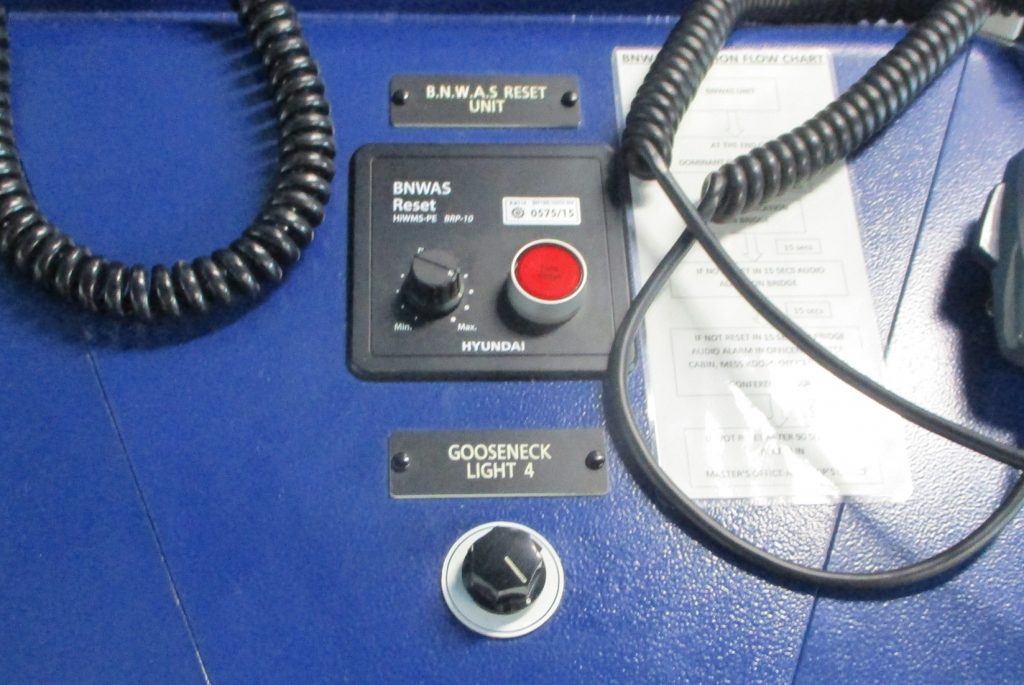
Several maritime accidents have historically been linked to:
- Watchkeepers falling asleep
- Reduced situational awareness
- Single-person bridge operations without adequate monitoring
BNWAS mitigates these risks by continuously verifying that the OOW is present and responsive. If not, the system ensures that backup personnel are alerted in time to intervene.
This makes BNWAS particularly relevant in:
-
- Low-traffic or monotonous voyages
- Night navigation
- Long autopilot operations
- Reduced manning conditions
How BNWAS Works: Alarm Philosophy
BNWAS operates through a sequence of timed alarms designed to escalate progressively if no response is detected.
1. Dormant Period
The system runs silently for a preset interval (typically 3–12 minutes), during which the OOW must acknowledge their presence.
2. Stage 1 – Visual and Audible Alert
If no acknowledgment occurs, a visual indication followed by an audible alarm is triggered on the bridge.
3. Stage 2 – Backup Alert
Failure to respond escalates the alarm to the Master’s cabin or other designated officers.
4. Stage 3 – General Alarm
If still unacknowledged, a louder alarm is activated in additional crew areas to ensure intervention. ()
Additionally, BNWAS includes an emergency call function, allowing the OOW to immediately summon assistance when required.
Modes of Operation
BNWAS typically operates in three modes:
- Automatic mode – activates when the autopilot or track control system is engaged
- Manual ON – system remains active regardless of navigation mode
- Manual OFF – only allowed under Master’s authority
The system is generally expected to remain operational at all times unless explicitly disabled by the Master under justified circumstances.
Regulatory Framework
SOLAS Requirements
BNWAS carriage requirements are defined under SOLAS Chapter V, Regulation 19, which mandates installation on:
- All passenger ships (regardless of size)
- Cargo ships ≥150 GT (phased implementation depending on build date) ()
The implementation was phased between 2011 and 2014, covering both newbuildings and existing vessels.
IMO Performance Standards
The system must comply with IMO Resolution MSC.128(75), which defines:
- Alarm stages and timing
- Reset functionality
- System reliability
- Integration with bridge equipment
Operational Best Practices Onboard
Although BNWAS is a relatively simple system, improper use or misunderstanding can significantly reduce its effectiveness.
Key best practices include:
1. Correct Setting of Dormant Period
- Avoid excessively long intervals (reduces effectiveness)
- Avoid excessively short intervals (causes nuisance alarms and complacency)
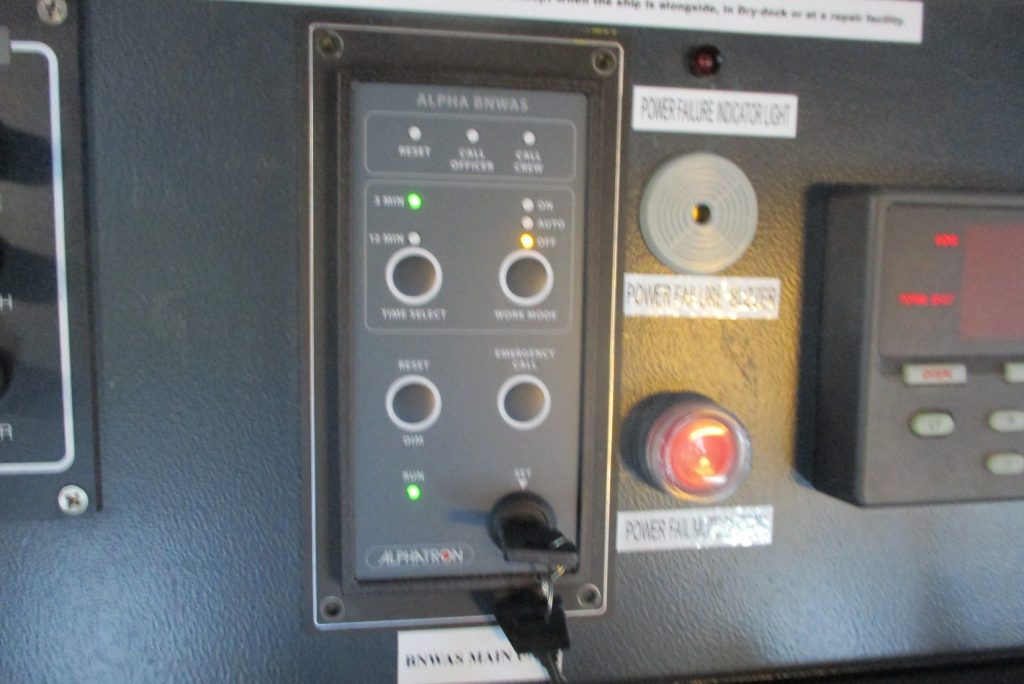
2. Proper Use of Reset Function
- Reset only from appropriate bridge locations
- Avoid “habitual” or unconscious resetting
3. Integration with Bridge Watchkeeping
- BNWAS is not a substitute for proper lookout
- Must complement STCW watchkeeping principles
4. Avoidance of Unsafe Workarounds
- Blocking sensors
- Using improvised methods to simulate activity
These practices are frequently targeted during inspections.
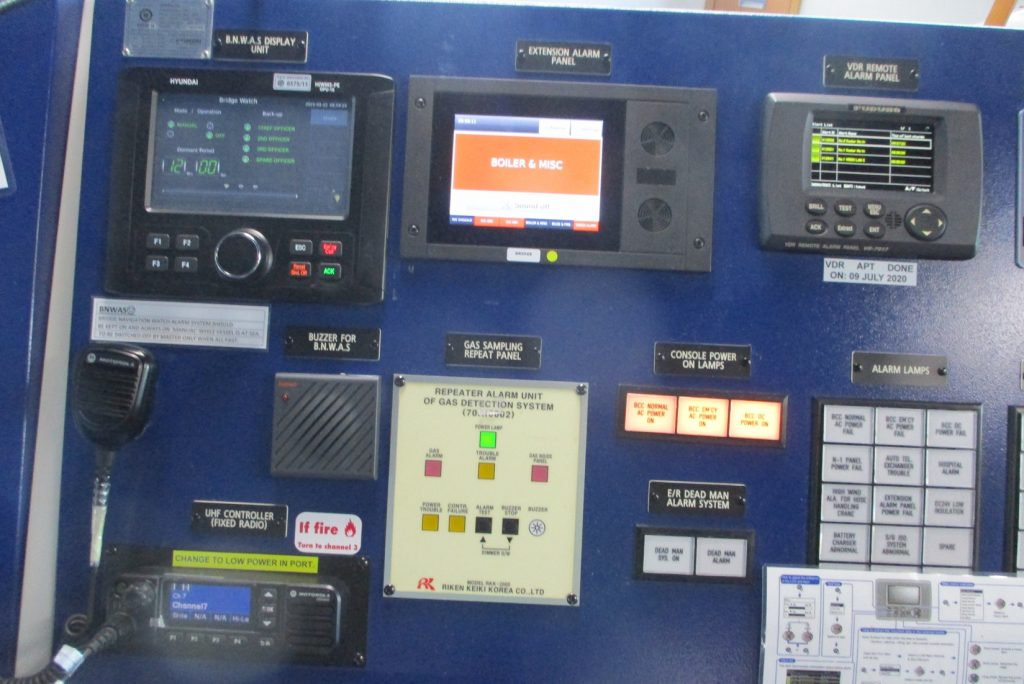
What Flag State and PSC Inspectors Check
BNWAS is a common inspection item, particularly under PSC regimes such as the Paris MoU and Tokyo MoU. Inspectors focus not only on equipment compliance but also on operational use.
1. Operational Status
Inspectors will verify that:
- BNWAS is powered and operational
- It activates automatically with autopilot (if applicable)
- Alarm sequences function correctly
A non-operational BNWAS can lead to deficiencies or even detention.
2. Alarm Sequence Testing
Typical PSC testing includes:
- Triggering Stage 1 alarm
- Verifying escalation to Stage 2 and Stage 3
- Confirming alarms are audible in designated locations
Failure in any stage is considered non-compliance with IMO standards.
3. Settings and Configuration
Inspectors often check:
- Dormant period setting (within acceptable range)
- Mode selection (AUTO / MANUAL ON)
- Evidence of improper deactivation
Special attention is given to systems found switched OFF without valid justification.
4. Familiarization of Crew
A frequent PSC observation is lack of crew familiarity.
Inspectors may ask:
- How to reset the system
- What happens during alarm escalation
- Where alarms are transmitted
Inadequate knowledge may result in ISM-related deficiencies.
5. Integration with Bridge Procedures
Inspectors assess whether BNWAS is properly integrated into:
- Bridge procedures
- Safety Management System (SMS)
- Watchkeeping routines
If BNWAS is treated as a “tick-box” system rather than an active safety tool, it may raise concerns.
6. Maintenance and Records
Although BNWAS requires minimal maintenance, inspectors may review:
- Planned Maintenance System (PMS) entries
- Test records
- Manufacturer recommendations
Lack of maintenance evidence can lead to observations.
Common Deficiencies Identified During Inspections
Based on PSC trends, the most frequent BNWAS-related deficiencies include:
- System switched OFF without Master’s authorization
- Incorrect alarm settings
- Inoperative alarm stages
- Crew unfamiliarity
- Evidence of bypassing the system
These deficiencies are often categorized under:
- SOLAS V/19 non-compliance
- ISM Code failures (procedural issues)
Practical Recommendations for Ship Operators
To ensure compliance and avoid PSC issues, operators should:
- Ensure BNWAS is always operational unless justified
- Train bridge teams regularly on system use and alarms
- Include BNWAS checks in bridge checklists
- Verify alarm escalation during drills
- Avoid complacency—BNWAS is a safety-critical system
Conclusion
BNWAS represents a simple yet highly effective safeguard against one of the most persistent risks in maritime navigation: human error due to fatigue or incapacitation. Its regulatory framework under SOLAS and IMO standards reflects its importance in modern bridge operations.
However, compliance goes beyond installation. Flag State and PSC inspections increasingly focus on real operational use, crew awareness, and integration into everyday watchkeeping practices.
For shipowners, operators, and crews, BNWAS should not be viewed as a regulatory burden, but as a critical layer of protection—one that can prevent accidents, save lives, and ensure safer navigation across the global fleet.
