

The Onboard Management Manual (OMM) has become an important compliance document on modern merchant ships fitted with Engine Power Limitation (EPL) or Shaft Power Limitation (ShaPoLi) systems under the IMO’s EEXI framework. As the maritime industry continues implementing measures to reduce greenhouse gas emissions, vessels equipped with power limitation arrangements must carry detailed onboard documentation describing how these systems are operated, monitored, and managed. The OMM plays a key role during Port State Control (PSC) inspections, Flag surveys, and class verifications, particularly when inspectors assess compliance with EEXI requirements and engine limitation arrangements.
Purpose of the OMM
The primary objective of the OMM is to provide clear operational guidance for the management of the vessel’s power limitation system.
The manual typically includes:
- Description of the EPL or ShaPoLi arrangement
- Operational limitations
- Override procedures
- Emergency operation guidance
- Record keeping requirements
- Crew responsibilities
The document ensures that the system is operated consistently and in accordance with the approved EEXI compliance method.
Regulatory Framework
The OMM for EPL systems is associated with the IMO regulations related to:
🔹 MARPOL Annex VI Chapter 4
and particularly:
- EEXI compliance requirements
- Engine or shaft power limitation arrangements approved by the Administration or Classification Society
The operational guidance for EPL/ShaPoLi systems is supported by IMO recommendations and class approval procedures related to:
- Verification of attained EEXI
- Compliance monitoring
- Override management
The OMM is generally reviewed and approved as part of the vessel’s technical file and compliance documentation.
What is an EPL or ShaPoLi System?
Engine Power Limitation (EPL)
EPL systems limit the maximum engine power available to the propulsion machinery in order to reduce fuel consumption and greenhouse gas emissions.
The limitation may be implemented through:
- Engine control software
- Fuel index limitation
- Mechanical adjustments
- Electronic control systems
Shaft Power Limitation (ShaPoLi)
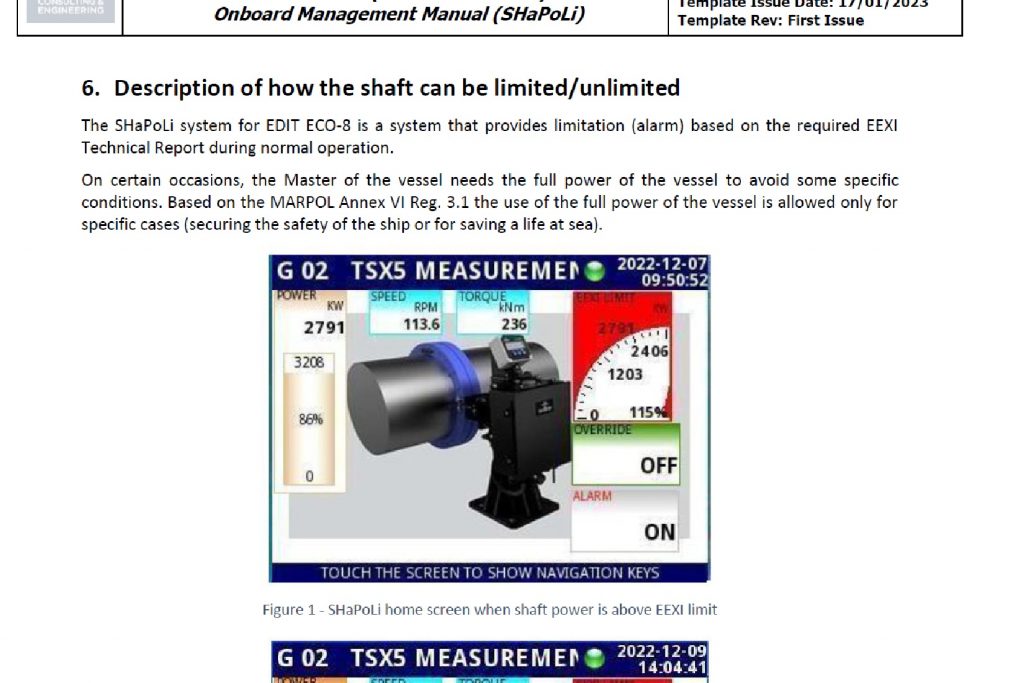
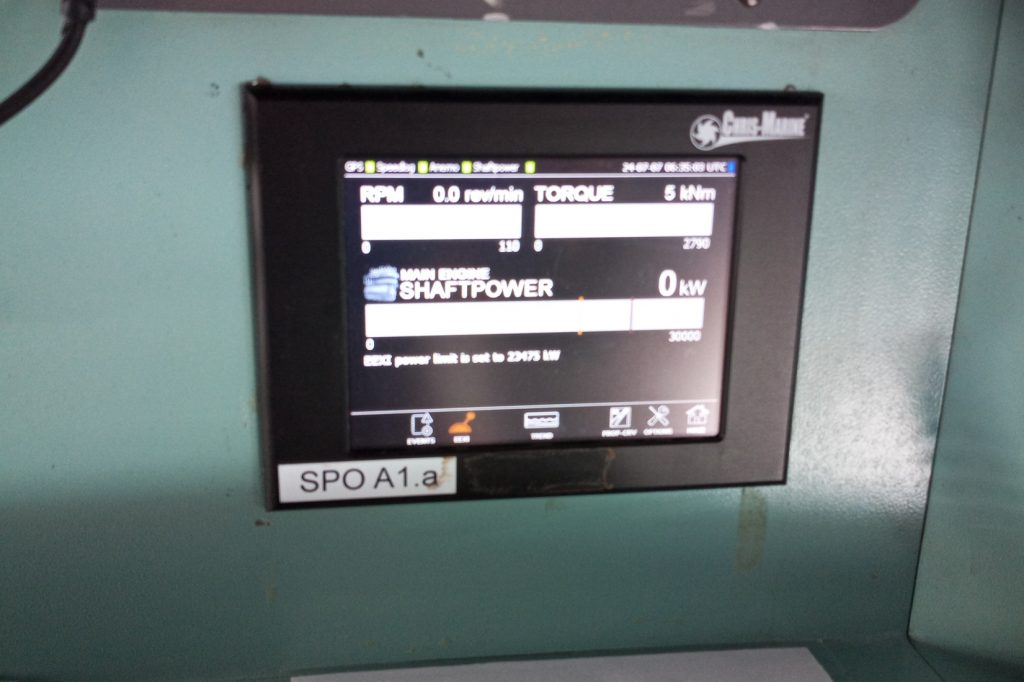
ShaPoLi systems limit the transmitted shaft power rather than the engine output itself.
Both systems are intended to ensure that the vessel operates within the approved EEXI limits.
Main Contents of the OMM
The OMM must clearly explain how the limitation system is managed onboard.
Typical sections include:
System Description
- EPL or ShaPoLi configuration
- Main components
- Limitation method
Operational Procedures
- Normal operation
- Start-up conditions
- Monitoring requirements
Override Procedures
- Emergency override activation
- Authorization requirements
- Recording obligations
Sealing Arrangements
Where applicable, details of:
- Mechanical seals
- Electronic protections
- Tamper prevention measures
Record Keeping
Procedures for documenting:
- Override activation
- Maintenance activities
- System modifications
The consistency between documented procedures and their practical implementation onboard is an important aspect of ISM internal audits, where auditors assess whether management system requirements are effectively applied in day-to-day vessel operations.

Override Functions and Emergency Operation
One of the most important aspects of the OMM is the management of override functions.
The system may allow temporary override activation in situations involving:
- Safety of the ship
- Avoidance of immediate danger
- Navigation in adverse weather
- Emergency maneuvering
The OMM should clearly define:
- Who can authorize the override
- How it is activated
- Maximum duration
- Reporting and recording requirements
Improper use of override functions may raise compliance concerns during inspections.
Inspection and PSC Focus Areas
PSC inspectors and surveyors increasingly verify EPL arrangements during inspections.
Typical verification items include:
- Availability of the approved OMM onboard
- Consistency between installed system and documentation
- Seal integrity
- Override records
- Crew familiarity with procedures
Inspectors may also review:
- Engine settings
- Electronic limitation parameters
- Maintenance history
- Evidence of unauthorized modifications
An incomplete or outdated OMM may result in deficiencies.
Common Operational Challenges
Several practical issues are commonly identified onboard vessels fitted with EPL systems.
Crew Familiarity
Engineering officers may not fully understand:
- Override procedures
- Reset conditions
- Documentation requirements
Documentation Updates
System modifications are sometimes not reflected in the latest OMM revision.
Record Keeping Deficiencies
Missing entries related to override activation or maintenance activities are frequent findings.
Communication Between Departments
Bridge and engine departments may not always coordinate effectively during override situations.
Best Practices for Ship Operators
To ensure compliance and operational reliability, operators should focus on:
Regular Crew Training
Ensure engineers and officers understand:
- EPL operation
- Override procedures
- Reporting obligations
Internal Verification
Periodically verify:
- Seal integrity
- Parameter settings
- Documentation consistency
Controlled Override Management
Override functions should only be used when operationally justified and properly recorded.
OMM Revision Control
The onboard version must always reflect the latest approved configuration
