

Hatch cover integrity plays a critical role in protecting cargo from seawater ingress during vessel operations. Deteriorated sealing arrangements, incorrect compression, structural deformation or poorly maintained securing devices can compromise weathertightness and expose shipowners, charterers and P&I interests to cargo damage and subsequent claims.
Ultrasonic hatch cover testing (UST) provides a practical method for assessing sealing effectiveness without the use of water. The technique can identify areas where ultrasonic signals pass through the hatch cover sealing arrangement, allowing potential leakage paths to be located and evaluated.
However, an ultrasonic test should not be considered in isolation. Correct preparation, hatch cover condition, closing arrangements and interpretation of the findings are essential if the test is to provide meaningful information about hatch cover weathertight integrity.
Why Hatch Cover Weathertightness Matters
Cargo hatch covers exposed to weather are designed and maintained to prevent water from penetrating into cargo spaces under the conditions for which their weathertight arrangements are intended.
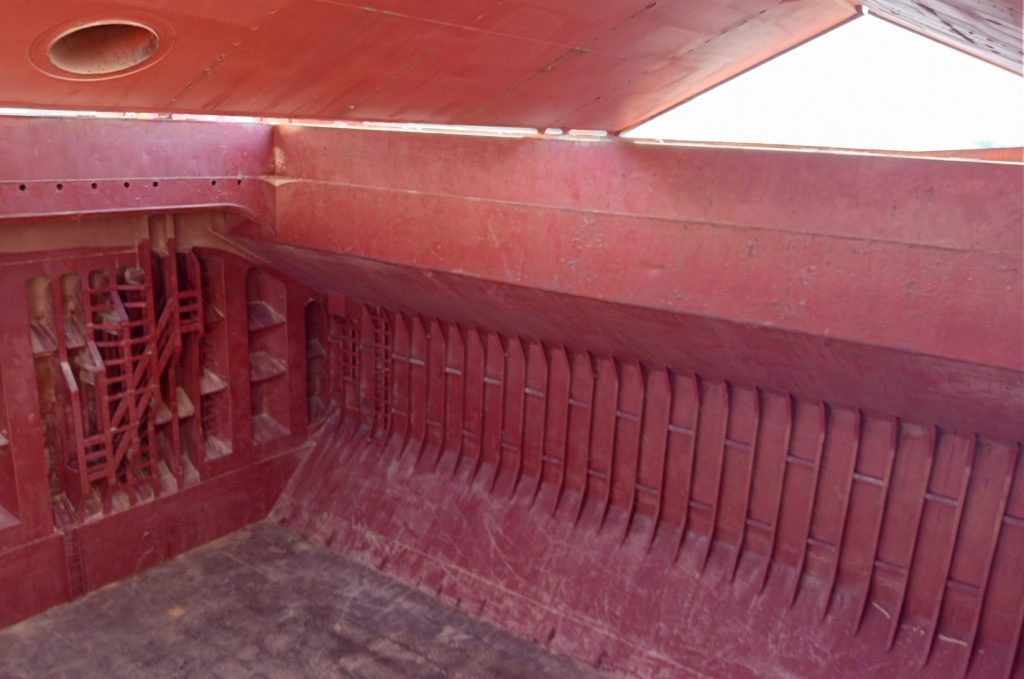
The International Convention on Load Lines addresses hatchways and hatch cover closing arrangements as part of the vessel’s weathertight integrity. For relevant hatchways, the regulations require weathertight covers fitted with suitable gaskets and clamping devices and provide for tightness testing during applicable surveys.
-
Loss of sealing effectiveness can result from several factors, including:
- deteriorated or permanently compressed rubber gaskets;
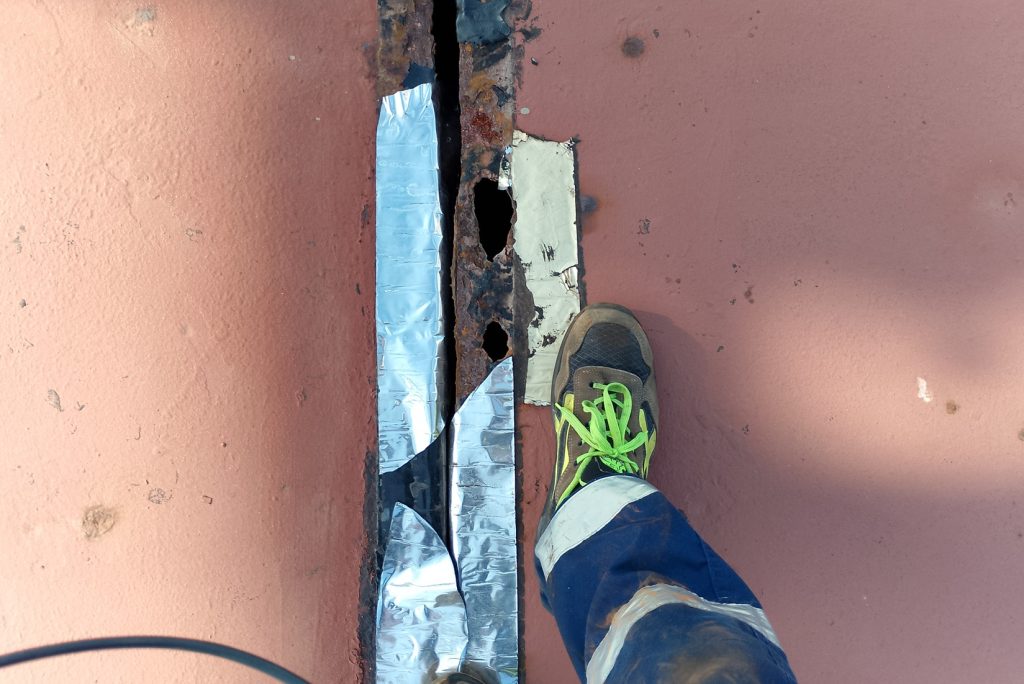
- corrosion or damage to compression bars;
- defective cleats and securing arrangements;
- misalignment of hatch cover panels;
- damaged cross-joint arrangements;
- structural deformation;
- contamination of sealing surfaces;
- inadequate maintenance or adjustment.
The presence of one of these conditions does not by itself establish that seawater will enter a cargo hold. It does, however, justify closer examination of the sealing arrangement and, where appropriate, tightness testing.
What Is Ultrasonic Hatch Cover Testing?
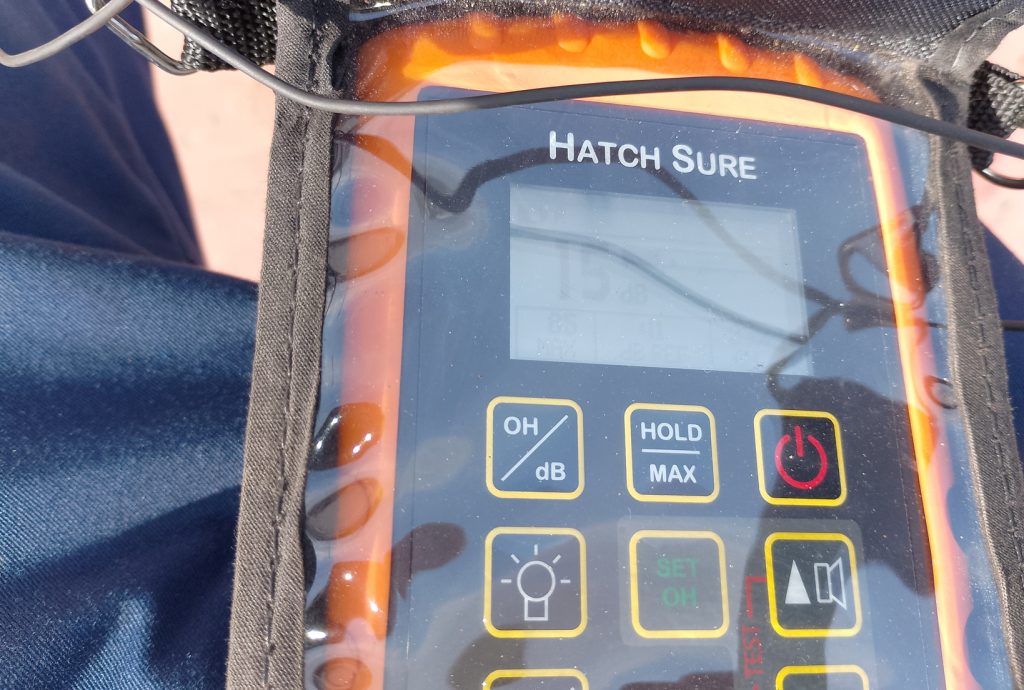
Ultrasonic hatch cover testing uses a transmitter placed inside the cargo hold and a portable ultrasonic receiver used externally around the closed hatch cover.
The transmitter generates ultrasonic signals inside the hold. With the hatch covers properly closed and secured, the surveyor moves the receiver around the perimeter sealing arrangements, cross-joints and other relevant areas.
Where ultrasonic energy escapes through the sealing arrangement, the receiver detects the signal.
This allows leakage locations to be identified without introducing water onto the hatch covers or deck.
The objective is therefore not simply to obtain a numerical reading. The surveyor must determine where signal transmission is occurring, examine the corresponding sealing arrangement and interpret the finding in the context of the hatch cover condition.
Typical Ultrasonic Testing Procedure
The exact procedure depends on the equipment used, hatch cover design, vessel condition and purpose of the attendance. A typical survey may involve the following stages.
1. Preliminary visual inspection
Before testing, the surveyor should examine the hatch cover arrangement and accessible sealing components.
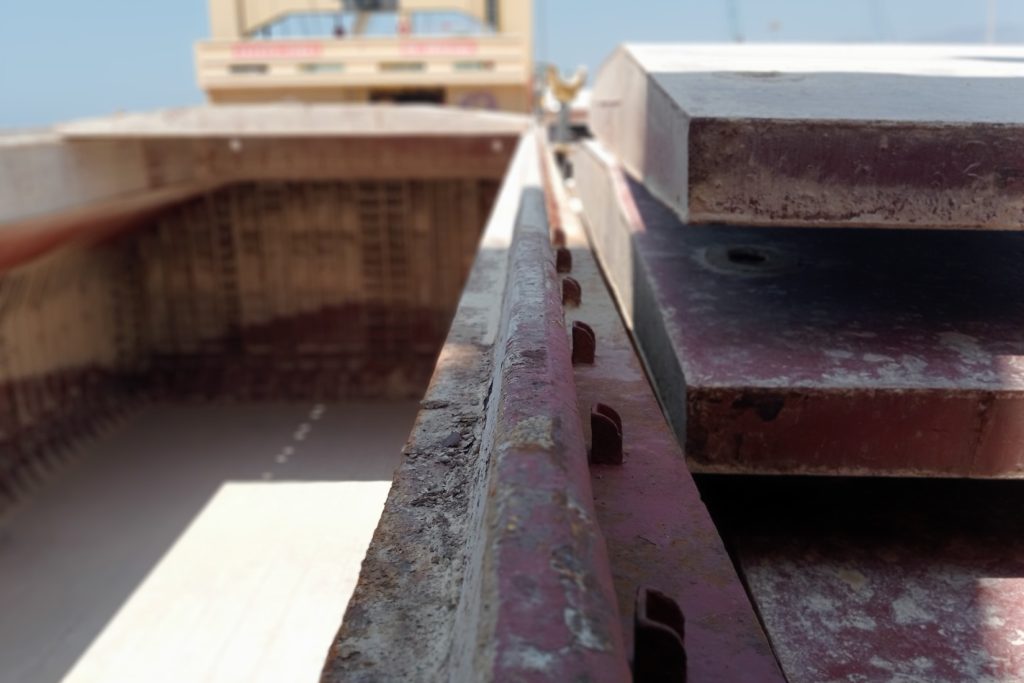
Particular attention may be given to rubber packing, compression bars, cross-joints, drain channels, non-return arrangements, cleats, wedges, panel alignment and visible structural condition.
A visually defective sealing arrangement should not be ignored simply because an ultrasonic test is planned.
2. Preparation of the cargo hold
The ultrasonic transmitter is positioned inside the cargo hold in accordance with the testing arrangement and equipment requirements.
The signal should provide suitable coverage of the area being tested.
3. Hatch cover closing and securing
Hatch covers should be properly closed and secured in their normal operational condition.
This is important because the effectiveness of the sealing arrangement depends not only on the gasket itself but also on panel alignment, compression and securing arrangements.
4. Establishing reference conditions
Before interpreting leakage readings, the surveyor establishes appropriate reference conditions for the equipment and test arrangement.
This provides the basis against which signal transmission detected around the hatch cover can be assessed.
5. External scanning
The receiver is passed systematically around the hatch cover sealing perimeter and relevant cross-joints.
Locations producing significant ultrasonic signal transmission are identified and recorded.
6. Investigation of findings
When abnormal transmission is detected, the corresponding area should be examined to determine the likely reason.
Possible causes can include damaged rubber packing, inadequate compression, corrosion of the compression bar, panel misalignment or defective securing arrangements.
7. Reporting
The final report should clearly identify the areas tested, relevant findings and locations where leakage indications were detected.
Depending on the purpose of the survey, photographs, diagrams or marked hatch cover plans may be used to document the findings.
Common Findings During Ultrasonic Hatch Cover Tests
In operational vessels, ultrasonic testing frequently identifies problems associated with deterioration rather than complete failure of the hatch cover system.
Typical observations may include localised leakage at cross-joints, hardened or permanently compressed rubber packing, uneven compression, corroded compression bars, defective cleats, panel misalignment and damaged sealing surfaces.
Cross-joints deserve particular attention because several sealing components interact within a relatively small area. Poor adjustment or deterioration in these locations can create significant leakage paths even where the remainder of the hatch perimeter appears satisfactory.
Another recurring issue is the difference between visible condition and actual sealing performance. A gasket may appear acceptable during a general visual inspection while ultrasonic testing reveals signal transmission at specific locations.
Conversely, ultrasonic readings should not replace physical inspection. The two methods complement each other.
Ultrasonic Testing vs. Hose Testing
Both methods can be used to assess hatch cover sealing effectiveness, but they operate differently.
A hose test applies water externally while the cargo hold is inspected for evidence of water penetration. Ultrasonic testing instead uses controlled ultrasonic signal transmission and therefore does not require water to be applied to the hatch covers.
The ESP Code refers to checking hatch cover sealing effectiveness by hose testing or equivalent, illustrating that tightness assessment is not limited to a single technique.
Ultrasonic testing can be particularly useful when the use of water is operationally inconvenient or undesirable, including situations involving cargo operations or where introducing water onto deck or into cargo spaces would create practical limitations.
However, the suitability of a particular testing method depends on the purpose of the inspection and any applicable requirements of the Flag Administration, Classification Society, P&I Club or other instructing party.
Ultrasonic Testing and Cargo Claims
The commercial relevance of hatch cover integrity becomes particularly clear when moisture-sensitive cargoes are carried.
If seawater enters a cargo hold during a voyage, the investigation may involve examination of hatch covers, sealing arrangements, drainage systems, weather conditions, cargo condition and other possible ingress routes.
Ultrasonic testing may then be requested as part of the technical investigation to assess whether potential leakage paths exist through the hatch cover sealing arrangement.
At the same time, the presence of an ultrasonic leakage indication does not by itself establish the cause of a particular cargo damage claim. Causation requires consideration of the available evidence and circumstances of the incident.
This distinction is important in both survey reporting and claims-related investigations.
When Is Ultrasonic Hatch Cover Testing Commonly Requested?
UST may be requested in different operational and commercial situations, including:
- before loading moisture-sensitive cargo;
- during P&I condition surveys;
- in connection with on-hire or pre-charter condition surveys;
- following concerns regarding hatch cover maintenance;
- after repairs or adjustment of sealing arrangements;
- during investigations involving suspected water ingress;
- when requested by Owners, Charterers, P&I interests or other principals.
The purpose of the attendance should always be established before testing because it determines the scope of inspection and reporting required.
Practical Limitations
Ultrasonic hatch cover testing is a valuable diagnostic technique, but it should not be interpreted as a complete structural assessment of the hatch cover system.
Results can be influenced by test configuration, equipment setup, hatch cover closing condition and the accessibility of sealing arrangements.
The test does not replace examination of structural condition, securing devices, drainage arrangements or maintenance condition. Nor does it determine automatically whether a particular cargo loss resulted from hatch cover leakage.
A technically useful assessment therefore combines visual inspection, correct test execution and professional interpretation of the findings.
Conclusion
Ultrasonic hatch cover testing provides an efficient method for assessing hatch cover sealing performance and locating potential leakage areas without applying water to the vessel.
Its value extends beyond obtaining readings. Proper testing requires inspection of the hatch cover arrangement, correct preparation and closing of the covers, systematic scanning and careful interpretation of detected signal transmission.
For shipowners, charterers and P&I interests, identifying sealing deficiencies before cargo exposure can contribute to better maintenance decisions, cargo protection and loss prevention.
Where water ingress or cargo damage has already occurred, ultrasonic testing can also provide useful technical evidence — but its findings must be considered together with the wider circumstances of the incident.
